
Case studies
Case studies are very detailed investigations of an individual or small group of people, usually regarding an unusual phenomenon or biographical event of interest to a research field. Due to a small sample, the case study can conduct an in-depth analysis of the individual/group. It is also important to not that case studies can also focus on typical or mundane things such as childhood memories.
Case studies will tend to collect qualitative data. A researcher will collect a history of information on the individual and they can do this through a variety of methods including interviews, observations, questionnaires and psychometric tests.
Case studies tend to take place over a long period of time where data is collected many times over this period. The data collection may also involve gathering information from the individuals family, friends and professionals connected to the individual, such as teachers or doctors.
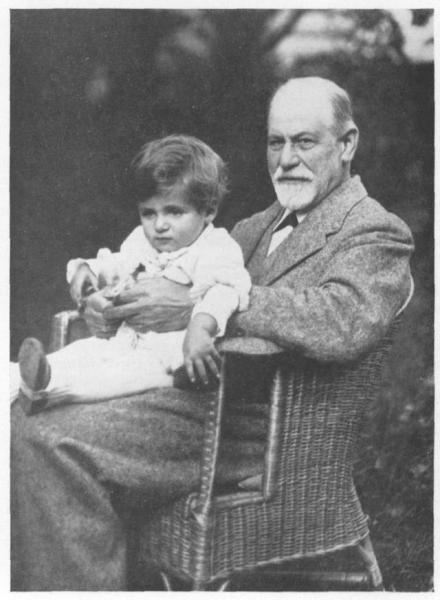
One case study that you will already be familiar with is the case of Little Hans that was published by Freud. This case study was used to support his theory on the unconscious mind and the oedipus complex.
We also covered the case study of HM in the memory unit of the course.
Another famous case study that isn’t covered on the specification, but you may want to look into, is the case study by Thigpen & Cleckley (1954). These psychologists studied a young woman called Eve who was one of the first cases of multiple personality disorder. You can read up on it using the link below:
http://www.holah.karoo.net/thigpenstudy.htm
Strengths:
- Studying abnormal psychology can us a huge insight into things in which we otherwise would have very limited understanding. For example the case of Eve with multiple personality, which you can watch in the video above.
- The detail collected on a single case may lead to interesting findings that conflict with current theories, and stimulate new paths for research.
- Case studies create opportunities for a rich and detailed data. The depth of analysis can increase validity (i.e. providing an accurate and exhaustive measure of what the study is hoping to measure).
- Researchers can build a relationship with the participant and therefore collect data that is possibly more valid as they feel more comfortable to be honest around the researcher.
Weaknesses:
- There is little control over a number of variables involved in a case study, so it is difficult to confidently establish any causal relationships between variables.
- Case studies are unusual by nature, so will have poor reliability as replicating them exactly will be unlikely.
- Due to the small sample size, it is unlikely that findings from a case study alone can be generalised to a whole population.
- The case study’s researcher may become so involved with the study that they exhibit bias in their interpretation and presentation of the data, making it challenging to distinguish what is truly objective/factual.
- In addition, case studies may have ethical issues in terms of privacy. This is because they tend to study unusual topics of behaviour and the researcher will spend a lot of time with the participant.
Content Analysis & Coding
Content analysis is a method used to analyse qualitative data and is often used when analysing data in case studies. In its most common form it is a technique that allows a researcher to take qualitative data and to transform it into quantitative data (numerical data). The technique can be used for data in many different formats, for example interview transcripts, film, audio recordings, diary entries, emails etc.
How is content analysis carried out?
One example is if a researcher wanted to analyse data from an observational study where 100 cars were fitted with video cameras to record the driver’s behaviour. In order to analyse the videos using content analysis, the following steps would be made:
- The psychologist would begin by watching some of the film clips of driver behaviour.
- This would enable the psychologist to identify potential categories which emerged from the data. These categories would tend to be behaviours that appeared to happen regularly throughout the film. Some examples of categories / themes from this video may include: passenger distractions, gadget distractions, etc.
- The psychologists would then have watch the films again and count the number of examples which fell into each category to provide quantitative data. This is called Coding because it involves categorising large amounts of information into meaningful chunks/codes
Other examples of coding include:
- counting how many times particular words are used in children’s adverts aimed at boys compared to girls e.g. words like adventurous, caring or kind
- number of positive or negative words used by a mother to describe her child’s behaviour
- number of swear words in a film.
Content Analysis: Thematic Analysis
The main difference between Thematic analysis and Coding is that coding tranforms qualitative data into quantitative data, thematic analysis keeps the data as qualitative, but it attempts to condense the data.
Psychologists can do this by repeatedly reviewing the data so that they can identify trends in the meaning conveyed by language. The process of coding and identification of themes are closely linked insofar as themes may only emerge after data is coded. However, this is not always the case, themes may also emerge by reading over the content over and over again, and the researcher may notice trends in doing so.
Themes are descriptive in comparison to coding units, and is therefore under the branch of qualitative data. Themes will tend to focus on identifying trends and commonalities in terms of ideas, expression, and emotion, whereas coding is more focused on how many particular words are used, or how often a particular behaviour has occurred. The themes identified are re-analysed so that they become more refined and relevant. The researcher then picks out specific examples of the themes by quoting the qualitative data in order to support the existence of the theme. The researcher may then collect further data from other people and then look for the same themes to see if a pattern emerges, thus improving the validity.
For example, when I was at university, I used thematic analysis to identify themes in an interview that I carried out with someone about their depression and physical disability.
I found themes like ‘dehumanising the illness’. Through the process of coding, the words ‘monster’, ‘fight’ and ‘it’ came up quite a lot, and it was through this coding, that I was able to identify a theme. I then provided quotes, everytime the individual did this. For example ‘It’s like a monster that you have to fight everyday. It’s hard to not let it beat you, but I try my best to keep it at bay’ I interpreted this as the individual, trying to detach themselves from from the illness and not wanting to accept that it was a part of them.
Try it yourself!
If you want to, you guys could have a go at content analysis yourself. Please see below a video of Richard Kuklinski. He was a hit man and he has claimed to have killed over 200 people. In a usual content analysis you would watch the video over and over again and pick out commonalities in order do develop codes and themes, but I’ve watched this so many times that I will give them to you.
In terms of codes, I want you to tally on a piece of paper every time he refers to basic physical and materialistic things such as sex, food, clothes, money, possessions. I have chosen this code because psychopaths tend to place a lot of importance on basic needs compared to emotional needs.
The second code, tally everytime he smirks, laughs or smiles when he is talking about extreme things, things that your usual person may not find very funny. I have chosen this code as it is a sign of a lack of remorse.
From the coding, did you notice any themes of your own?
Now, for thematic analysis, you need to have some themes, and you need to provide quotes of what Kuklinski says that could fit into those themes. For example the first theme I would like you to find quotes for is ‘Casual Language -Extreme Behaviour’
For example when Kuklinski is talking about his crimes, he says it in a very matter of fact way, again evidence for a lack of remorse
‘I once shot a guy in his Adam’s apple, to see how long it took for him to die. A few minutes. He drowned actually. I was with someone else, we had a $50 bet….. I lost’
The final theme I would like you to find quotes for is ‘Victims Deserving of Death’. For example when Kuklinski talks about his murders he tends to make it sound like there was no other option and that they were kind of asking to die.
‘This person decided that he couldn’t wait to get inside to urinate. He never did’
I really recommend that you have a go at this. It’s a very interesting documentary and highlights the contributions of nature and nurture towards the end. I must watch!
Evaluation of content analysis
Strengths:
- It is a reliable way to analyse qualitative data as the coding units are far less open to interpretation and so are applied in the same way over time and with different researchers. When there are simple codes, a computer can be used to pick them out which increases the reliability even further.
- Tends to be ethical, as the content that is analysed can often be data that is widely open and available such as newspapers, online interviews, adverts etc. This also means that researchers do not need to collect he data themselves. Secondary data is therefore less time consuming.
- Data can be quantitative and qualitative which allows data to be in depth through thematic analysis, but also includes the benefit of being able to easily present data and make comparisons through coding units.
- Coding is a relatively easy technique to use and is not too time consuming
- Coding allows a statistical analysis to be conducted if required as there is usually quantitative data as a result of the procedure.
- Offers a method to analyse a variety of forms of data including media and self-report methods so that insights into cultural trends and experiences can be understood.
Weaknesses:
- The identification of suitable themes and codes is subjective and decided by the researcher alone, meaning that conclusions lack any scrutiny or objectivity. Coding units tend to have higher inter-rater reliability as other researchers can clearly define and interpret it in an objective way. Whereas themes through thematic analysis tend to be more subjective and this can reduce the inter-reliability as they could be interpreted differently by different researchers.
- Causality cannot be established as it merely describes the data and bases interpretations on the researchers beliefs.
- Thematic analysis can be quite time couming. This is because in order to build themes, you need to go over the content a number of times.
Longitudinal Research
Longitudinal research is a type of correlational research that involves looking at variables over an extended period of time. This type of study can take place over a period of weeks, months, or even years. In some cases, longitudinal studies can last several decades. Longitudinal research tend to have much larger samples in comparison to a case study which would have one individual or a small group of people. They tend to collect quantitative data due to having larger samples.
Strengths:
- For many types of research, longitudinal studies provide unique insight that might not be possible any other way. This method allows researchers to look at changes over time. Because of this, longitudinal methods are particularly useful when studying development and lifespan issues. Researchers can look at how certain things may change at different points in life and explore some of the reasons why these developmental shifts take place. For example, consider longitudinal studies that looked at how identical twins reared together versus those reared apart differ on a variety of variables. Researchers tracked participants from childhood into adulthood to look at how growing up in a different environment influences things such as personality and achievement. Carrying out a snapshot study would lack validity in trying to gain long term development and change.
- Since the participants share the same genetics there is no issue of individual differences. Unlike a cross-sectional study which would be comparing different sets of individuals of different ages. Longitudinal research doesn’t have the issue of this extraneous variable.
- The collection of quantitative data can make it easy to analyse when looking at the development of behaviour over time. And also make data collection quicker.
Weaknesses:
-
Longitudinal studies require enormous amounts of time and are often quite expensive.
-
Another problem is that participants sometimes drop out of the study, shrinking the sample size and decreasing the amount of data collected. This is known as attrition. Participants might drop out for a number of reasons, like moving away from the area, illness, or simply losing the motivation to participate. If the final group no longer reflects the original representative sample, attrition can threaten the validity of the experiment. Validity refers to whether or not a test or experiment accurately measures what it claims to measure. If the final group of participants is not a representative sample, it is difficult to generalise the results to the rest of the population.
Snapshot research
A snapshot study takes place at just one point in time, usually with a larger group of participants. It can collect both quantitative and qualitative.
Strengths:
Fast way of collecting data as you are only collecting data at one point in time.
Typically a larger sample and therefore it will be more generalisable. Also, because it is at one point in time, attrition rates are less likely.
Good way of obtaining evidence before a costly and time consuming longitudinal study.
Data is most likely quantitative, so it is easy to see cause and effect in the data.
Tends to have high reliability due to using experiments and collecting.
Weaknesses:
Lacks depth and detail in the data due to tending to collect quantitative data
It does not capture how behaviour can change over time. Therefore it may not reflect behaviour in the long-term.
Due to the use of experiments, they can lack ecological validity.
 CGS Psychology Blog: Mrs Harris