
Factors effecting eyewitness testimony: Leading Questions
An ‘eyewitness’ is someone who has seen or witnessed a crime, usually present at the time of the incident.
‘Eyewitness Testimony’ = the evidence provided in court by a person who witnessed a crime, with a view to identifying the perpetrator.
Leading questions:
A leading question is a question that either by form or content, suggests a desired answer or leads a an individual to believe a desired answer.
Much of the research in this area has been carried out by Elizabeth Loftus. Loftus has appeared in court as an expert known for studying false, repressed and unreliable memories for clients including the serial killer Ted Bundy, and in (Feb 2020) Harvey Weinstein.
Loftus is the co-author of the 1994 book The Myth of Repressed Memory: False Memories and Allegation of Sexual Abuse. In another book, Witness for the Defense, Loftus wrote that in her work for Bundy she seized on “leading and suggestive questions” by investigators and “hesitations and uncertainties on the part of the victim” as signs of muddled memories. Loftus also highlights how law enforcement “can lead people to want to produce details”.
By the way, I highly recommend that you read the books above as wider reading. They are superb!
Loftus & Palmer (1974) Experiment 1
Aim:
To investigate whether leading questions affect eyewitness testimony, specifically whether the wording of a question influences estimates of vehicle speed.
Procedure:
Loftus and Palmer used 45 American university students who were divided into five groups.
Participants watched seven film clips of traffic accidents and, after each clip, completed a questionnaire about what they had seen.
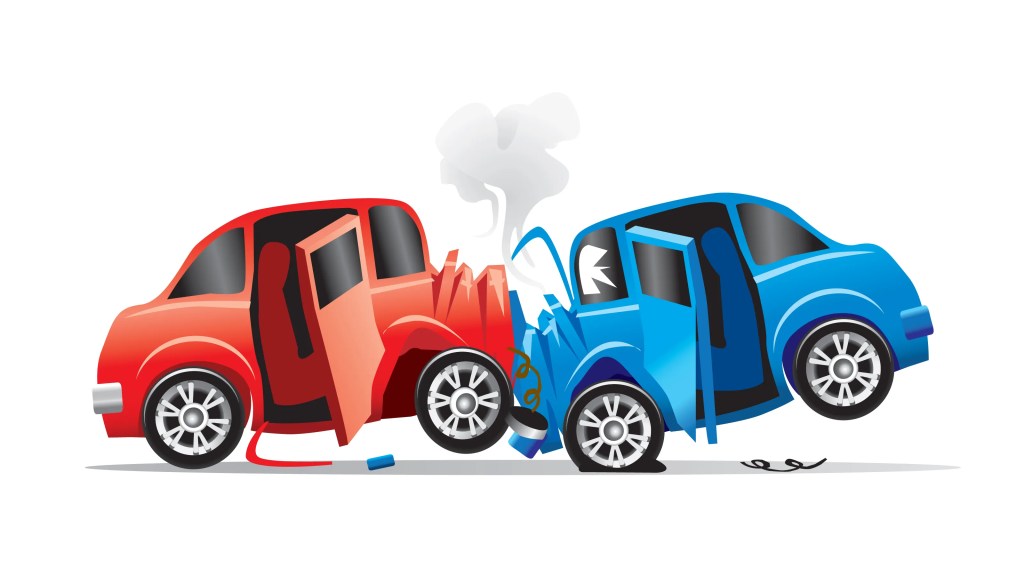
One question was critical: “About how fast were the cars going when they _____ each other. The blank was replaced with one of five verbs:
- Smashed
- Collided
- Bumped
- Hit
- Contacted
Participants then estimated the speed of the vehicles in miles per hour (mph).
Results
| Verb | Mean Speed Estimate (mph) |
|---|---|
| Smashed | 40.8 |
| Collided | 39.3 |
| Bumped | 38.1 |
| Hit | 34.0 |
| Contacted | 31.8 |
The more intense the verb, the higher the speed estimate. EXAM TIP: Only learn the speed estimate for contacted and smashed.
Conclusion
The wording of a leading question can influence eyewitness testimony. Participants who heard more severe verbs (e.g. smashed) gave higher speed estimates than participants who heard less intense verbs (e.g. contacted).
However, Experiment 1 could not determine whether this effect was caused by:
- Response bias (the verb influenced the answer given), or
- Memory distortion (the verb actually altered the participant’s memory of the event).
This led Loftus and Palmer to conduct Experiment 2.
Loftus & Palmer (1974) Experiment 2
Aim
To investigate whether leading questions actually distort a witness’s memory of an event, rather than simply influencing the answer they give.
Procedure
Loftus and Palmer recruited 150 American university students.
Participants watched a one-minute film showing a multiple-car traffic accident.
After viewing the film, participants were divided into three groups:
- Smashed group: Asked, “How fast were the cars going when they smashed into each other?”
- Hit group: Asked, “How fast were the cars going when they hit each other?”
- Control group: Not asked about speed.
One week later, participants returned and answered a second questionnaire.
The critical question was: Did you see any broken glass?
There was no broken glass in the film.
Participants in the smashed condition were more than twice as likely to report seeing broken glass than those in the hit or control conditions.
Conclusion
The leading question altered participants’ memories of the event.
The word smashed suggested a more severe accident, causing some participants to falsely remember broken glass that was never present.
This supports the idea that eyewitness testimony is reconstructive. Memories are not recalled exactly as they occurred; instead, they can be distorted by information received after the event (post-event information).
Post-event Discussion
Post-event discussion is where two people witness a crime and then talk about what happened afterwards. This discussion could lead to inaccurate testimony because they combine information/misinformation from other peoples recollections with their own memories. Details from each account are combined to form a new/false memory.
Gabbert et al (2003)

Gabbert et al. (2003) investigated the effect of post-event discussion on eyewitness testimony.
The sample consisted of 60 students from the University of Aberdeen and 60 older adults recruited from the local community.
Participants were allocated to either a control group or a co-witness group. In the co-witness condition, participants watched a video of a crime from different viewpoints. They were led to believe that they had watched exactly the same event, but each participant could see details that the other could not. For example, one participant could see the title of a book carried by a woman, whereas the other participant could see a girl committing a theft.
Participants in the co-witness condition then discussed the event together before individually completing a recall test. Participants in the control condition completed the recall test without discussing the event.
Results:
Gabbert et al. found that 71% of participants in the co-witness condition recalled information that they had not actually seen but had picked up from their discussion partner. Furthermore, 60% of participants incorrectly reported that the girl was guilty despite not having witnessed her commit the crime themselves.
Conclusion:
Gabbert et al. concluded that post-event discussion can lead to memory conformity, where witnesses incorporate information from other people into their own recollection of an event. This demonstrates that eyewitness testimony can be distorted by discussions with other witnesses, reducing its accuracy.
Evaluation
- Applications – Both pieces of research can be implemented into improving eyewitness testimony by training police officers in questioning or by making jurors aware in court rooms so that eye witness experts can be used in a trial.
- Quantitative data – Both pieces of research use quantitative data which increases objectivity and reliability. For example Loftus collected speed estimates. This is a strength because it means that due to the objectivity of quantitative data Loftus can easily see if the numerical data bears any differences in the different verbs that Loftus used in the study with little influence of researcher bias.
- Reliability – Both pieces of research can be considered highly reliable as they used standardised procedures such as having the same video clip of car accidents and asking the same critical question in Loftus, and all participants watching the same footage of the girl stealing and being asked the same questions in the recall part. This is a key strength because it means that extraneous variables are reduced due to the standardised procedures which ensured that the measure was consistent. Therefore the researchers can be more confident that the IV effected the DV.
- Ecological validity – Both studies can be considered to have some level of ecologically valid as parts of the study can be seen to reflect real life. For example Loftus used real life car accidents in the films that the participants observed. This is a strength because if the participant experiences the study in a realistic manner, they may act in a way which better presents how their memory would be influenced in real life, thus increasing the validity.
- Individual differences – Research by Loftus and Gabbert does not compare the accuracy of memory recall in terms of their age. Research has suggested that people aged between 18-45 are more accurate in eyewitness testimony than people aged 55-75. Research also tends to use younger people such as university students, therefore, people in the older generation may not be fairly represented.
- Ecological validity – Loftus and Gabbert’s research can be argued as lacking ecological validity. The use of clips in both studies does not recreate the emotion of a real life incident. Therefore, the research may not be valid when generalising memory recall in real situations of crimes of accidents. In addition, when giving real accounts in EWT there are far more consequences compared to in a lab study. Your account could be taken to a court of law, these consequences would not be felt by the participant in a lab study.
- Demand Characteristics and Validity – A lot of the research may suffer with demand characteristics. When participants are asked a question that they don’t know the answer to, they guess, especially if they are asked a yes/no question. You answer in a way that seems the most helpful for the researcher.
- Generalisability – The sample in both studies are unlikely to be truly representative of the population. In the study Loftus only used students to study memory distortion. The participants are less likely to be drivers than the whole population due to their age range. This is a major weakness because their speed estimates might have been less accurate as a result of their lack of experience with cars. This therefore questions the validity of the study as it may have been participant variables that effected speed estimates and not the verbs.
Factors effecting eyewitness testimony: Anxiety
The inverted U relationship or Yerkes-Dodson law
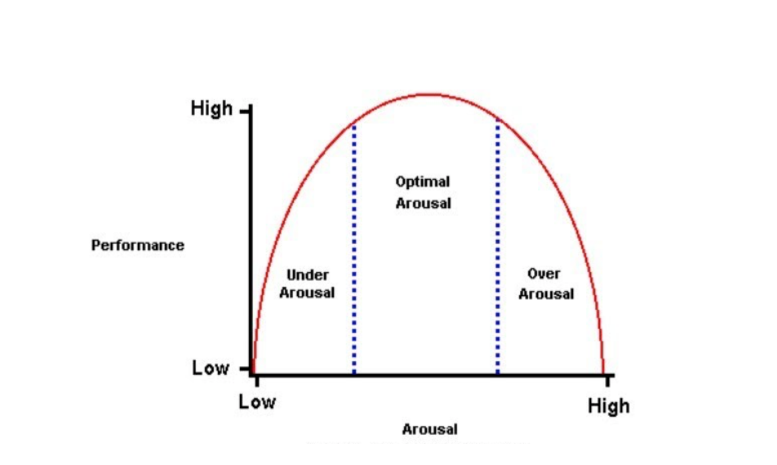
The Yerkes-Dodson Law suggests that performance is highest at a moderate level of arousal (stress/anxiety). If arousal is too low, people may lack alertness and motivation; if it is too high, performance can also decrease. Therefore, there is an optimum level of arousal at which performance is at its best.
Deffenbacher et al (2004)
Deffenbacher applied the Yerkes-Dodson Law to eyewitness testimony (EWT). He reviewed 21 studies and concluded that a moderate level of anxiety can lead to the most accurate eyewitness recall. However, when anxiety becomes very high, the accuracy of eyewitness testimony tends to decrease. Likewise, very low levels of anxiety may also result in less accurate recall.
Anxiety decreases accuracy:
Johnson & Scott (1976)
Johnson and Scott (1976) investigated the effect of anxiety on eyewitness testimony (EWT). Participants overheard an argument between two people in another room.
In the low-anxiety condition, participants heard a relatively calm discussion and then saw a man leave the room holding a pen with grease on his hands.
In the high-anxiety condition, participants heard a loud, violent argument, including the sound of breaking glass. They then saw a man emerge from the room holding a blood-stained paper knife.
Participants were later asked to identify the man from a set of photographs. 49% of participants in the low-anxiety condition correctly identified the man with the pen, compared with only 33% in the high-anxiety condition who identified the man holding the knife.
These results suggest that high levels of anxiety may reduce the accuracy of eyewitness testimony.
However, Johnson and Scott’s findings may also support an alternative explanation known as the weapon focus effect. It may not be anxiety itself that reduces identification accuracy. Instead, witnesses focus their attention on the unusual and threatening weapon rather than on the perpetrator’s face.
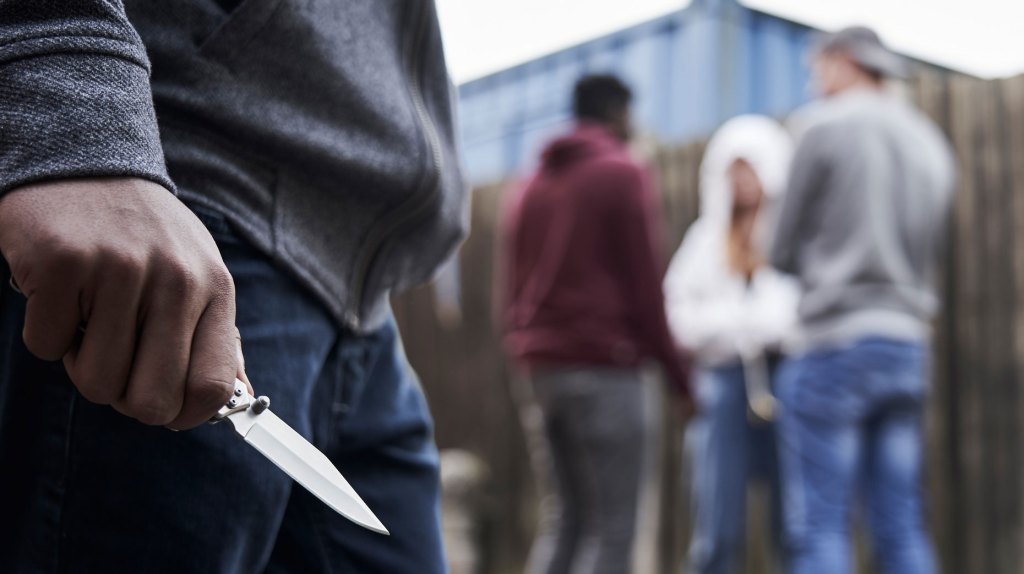
Supporting this explanation, Loftus et al. tracked participants’ eye movements and found that witnesses spent more time looking at the weapon than at the perpetrator. This meant they were less likely to remember other important details, such as the attacker’s appearance.
Loftus called this the weapon focus effect. One explanation for this is tunnel theory, which proposes that anxiety narrows a person’s attentional focus onto the source of threat, such as a weapon. As a result, peripheral details, including the identity of the perpetrator, are less likely to be encoded and later recalled accurately
Anxiety Increases accuracy:
Christianson et al (1993)
Christianson et al interviewed 110 witnesses to 22 real bank robberies. They found that witnesses who had been directly threatened during the robbery showed more accurate recall of the events than bystanders who had experienced lower levels of anxiety. This suggests that high levels of anxiety can improve the accuracy of eyewitness testimony in real-life situations. The findings support the view that anxiety is not always harmful to EWT and may sometimes enhance memory for important details.
Cutshall et al (1986)
Cutshall (1986) investigated the effect of anxiety on eyewitness testimony in a real-life shooting in Canada. During a robbery, a shopkeeper shot and killed the thief. There were 21 witnesses, and 13 agreed to take part in the follow-up study. The follow-up interviews took place 4 to 5 months after the incident and were compared with the original police interviews conducted shortly after the shooting. Witnesses were also asked to rate the level of stress they experienced at the time of the event on a 7-point scale. They were asked whether they had experienced ongoing emotional reactions, such as flashbacks or sleep disturbances.
The researchers found that the witnesses remained highly accurate in their accounts several months later. Participants who reported the highest levels of stress tended to provide the most accurate recall of events. These findings challenge the view that anxiety always reduces the accuracy of eyewitness testimony. Instead, they suggest that in real-life situations, high levels of anxiety may enhance memory for important events.
Evaluation
- Ecological validity and Ethical – Research that uses real life eye witness testimony is more reflective of the variety of factors that would play a role in the recollection of events, and is far more ethical, as the researchers themselves have not created the stressful condition.
- Applications – Research that understands how accuracy of eye witness testimony can be hindered, can be useful in trying to educate law systems such as the court room and the police department. If they are more aware as to why eye witness accounts may not be accurate, they can be more mindful of this when considering evidence.
- Individual differences – Some research has focused on how individual differences can effect eye witness testimony. For example, Bothwell et al. (1987) investigated the influence of personality on eyewitness testimony by measuring participants’ levels of neuroticism (a tendency to experience anxiety and worry). Participants then witnessed a staged crime and were later asked to identify the culprit from an identity parade. The researchers found that under low-stress conditions, participants who scored highly on neuroticism performed better than those who scored low on neuroticism. However, under high-stress conditions, the opposite pattern was found. Participants high in neuroticism performed significantly worse than participants low in neuroticism. These findings suggest that the effect of anxiety on eyewitness testimony depends partly on individual differences in personality. People who are naturally more anxious may cope well with low levels of stress but perform poorly when stress becomes too high. Taking an idiographic approach in anxiety is likely to be more reflective of the wide ranging experiences of anxiety that we feel.
- Ecological validity – most research into weapons focus has been lab based. In real life situations there seems to be less impact than research would predict. Studies have found that the presence of a weapon has little impact on accurate identification of culprits in real-life identity parades!
- Validity – studies that use field experiments or case studies lack control. For example Cutshall et al, could not control the effects of post-event discussions. This could have acted as an extraneous variable and therefore it is hard to establish cause and effect.
- Reductionist – The inverted U theory is too simplistic. It does not take into account the combination of factors that could effect testimony, such as previous experiences, individual differences, cognition, behaviour, emotional and physiological effects.
- Demand characteristics – Due to lab studies. participants are likely to work out the aim of the study. Especially in studies where participants are asked to watch a video. It could seem pretty obvious that they will be questioned on what they saw on the video.
- Ethics – Research where anxiety is invoked may raise ethical issues of psychological harm.
Cognitive Interview
Standard Interview (SI)
Fisher and Gieselman identified a number of ways that standard police interview methodology could negatively affect eye witnesses’ recall accuracy of crimes.
For example, they found that it required little, to no training. The interviewers would be free to ask what ever they felt was relevant and this means that questions could be random and jump between different information e.g. visuals of a suspect and then jump to comments made by others. In addition, questions would often be closed yes/no questions or require short answers. This leads to interruptions and inappropriate sequences of questions which can be confusing for a witness.
For example:
- Where were you last night?
- What were you doing?
- Who were you with?
- What time was it?
Fisher and Gieselman (1992) designed the Cognitive Interview
At the start of a cognitive interview, the interviewer attempts to help the witness feel relaxed, and seeks to tailor their language to suit the individual. The interview focuses on utilizing retrieval cues, a Fisher and Gieselman claimed that this aids recall. The interviewer is encouraged to follow the witnesses train of thought rather than get them to recall incidents in chronological order. They try to ensure that distractions are kept to a minimum, allow pauses, and ask open ended questions.
The technique is based around four main components:
Report everything: It encourages witnesses to report all detail that they can remember regardless of how trivial it may appear. This techniques avoids interruptions and might be useful in triggering additional information.
Context reinstatement: It tries to recreate the scene of the incident in the mind of the witness, this includes the sights, sounds and smells, emotions and feelings of the person at the time. This is based on the concept of cue dependent memory. The idea that if there the context or state of recall is similar to the actual event, memory recall will improve.
Narrative reordering: It encourages witnesses to recall events in different orders, for example starting half way through a sequence of events and then working backwards. This is done to prevent people from reporting expectations of how the event must have happened (schemas), rather than the actual event. It also helps to prevent lying, because those telling the truth will find narrative reordering easier than those being dishonest.
Recall from a different perspective: It encourages witnesses to view the scene as others present may have seen it, for example as other witnesses, the victim or the perpetrator may have seen the incident. This is encourage recall of what actually happened instead of recalling expectations from schemas i.e. expectations of what happened due to the setting or situation that you are in.
Fisher (1989)
Carried out a field experiment to test the use of Cognitive Interview in a real life setting, to see if it enhanced the memory of both witnesses and victims of real crimes. Interviews with real witnesses by 16 detectives of a robbery division in Florida were carried out. One group of detectives were trained to use CI where as the other group had no training (likely to use Standard Interview). They found that 63% more information were recorded in the trained CI group compared to the untrained group.
Evaluation
Strengths:
- Usefulness – Kohnken et al. (1999) – Carried out a meta-analysis of 50 studies and found that the Enhanced Cognitive Interview gave consistently more accurate information (81% increase) in comparison to the Standard Interview. However, they also found that witnesses recalled more incorrect information (61%) when interviewed with the Enhanced cognitive interview compared to the standard interview technique, perhaps because more detailed recall increases the chances of making mistakes.
- Usefulness – We have learned from research the benefits of cognitive interview and it has allowed a greater understanding of its effectiveness. Milne & Bull (2002) Found that when they used a combination of “report everything” and “mental reinstatement”, participants’ recall was significantly higher compared to other combinations.
- Individual differences – age: Wright and Holliday (2007) investigated how age affects recall. They found that when they used the cognitive interview technique, the older participants recalled significantly greater detail without giving any false information. However, Gieselman’s (1999) research suggests that young children seem to find the instructions of the cognitive interview confusing, and as a result produces poorer recall than with standard police interviews. From his research, he recommends that CI is only used on children aged eight and over.
Weaknesses:
- Generalisability – It is difficult to compare studies carried out in different countries and even between different police forces within a country since there are now so many variations on the CI. For example in the UK the Merseyside force use pretty much the original Fisher and Geiselman design whereas Thames Valley Police tend to drop the ‘reinstating context.’ This may make it difficult to generalise the findings and be effectively implemented to a variety of police departments.
- Usefulness – Practical issues – the cognitive interview tends to be too time-consuming in practice. This also leads to inconsistency in how the technique is put into practice. This could have huge consequences in testimonies, as some people with have higher quality interviews than others, and this could lead to someone either being wrongly convicted, or wrongly found not guilty. A further criticism of early studies of the CI was that the amount and quality of training that interviewers were given was not consistent. It is likely that differences in the attitudes, motivation and prior experience of the interviewers play a big role in determining the kind of results obtained with the CI.
- Subjective – In practically all studies, performance is measured in terms of the percentage of interview statements that are correct or the absolute number of correct and incorrect statements. One potential problem of limiting research to these measures is that it ignores the amount of unreported information, which is as important to determine the effectiveness of any interview procedure. For example if a person is asked to only tell the truth, they may avoid putting some information forward if they aren’t completely sure it is the truth. Therefore, further research is needed in order to improve the way interview techniques are measured in terms of unreported information.
- Validity – It is difficult to compare Standard Interview with CI due to the fact that they are too different. For example the CI involves thorough training, but SI doesn’t. In addition, it is impossible to control for individual differences as every interviewer has their own approach when using the standard interview, but because CI is so standardised, it doesn’t have this issue. Comparing SI with CI was a good start, however research has now moved on and the SI will obviously be worse in accuracy in comparison, therefore it would probably be better to use CI as the basis of comparison.
- Individual differences – Gieselman’s (1999) research suggests that young children seem to find the instructions of the cognitive interview confusing, and as a result produces poorer recall than with standard police interviews. From his research, he recommends that CI is only used on children aged eight and over.

