
Psychology’s early roots – The guys who started it all (apparently? – I reckon it was a woman 😉
|
|
Rene Descartes (sixteenth – seventeenth centuries)
Philosophers of the sixteenth and seventeenth centuries were preoccupied with the interaction of mental and physical and questioning whether the two were distinct. 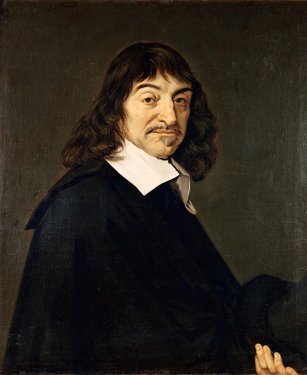 |
|
John Locke (seventeenth century)
British philosopher John Locke suggested an empirical approach to studying the human condition. Our only reliable source of information about our world is through our senses and what we observe directly. Being a monist (the idea that mind is a function of the brain and therefore not a separate entity) he believed that our perceptions, sensations, feelings and thoughts were all processes of the brain. Additionally he proposed that humans are born a blank slate (tabula rasa). All that we become is due to our environment. These ideas formed the basis of behaviourist psychology in the early twentieth century.  |
|
|
|
Charles Darwin (nineteenth century)
Proposed the concept of natural selection and the idea that not only our physiology but also our behaviour must have evolved to increase our chances of survival and reproduction. Central to the areas of biological and comparative psychology is this idea that our behaviour must be adaptive. 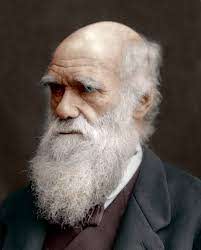 |
Overall, the thing to take away from these 3 guys, was that Psychology wasn’t quite Psychology at this point. Psychology was known as another subject – Experimental Philosophy. Philosophy and psychology are two fields of study with a common place in history. Psychology arises out of philosophy. It arose in order to include the empirical method when examining questions posed by philosophy.
The jury is out on who should be classed as the first psychologist. Some believe Descartes or Locke deserve the title, mostly modern psychologists consider Wundt.
Wilhelm Wundt (1879)
German Philosopher and unquestionable father of experimental psychology.
Wundt was the first self-professed ‘psychologist.’ He set out with the very best intentions, to produce a scientific study of human mind and behaviour. Initially only behaviours that were observable were studied, such as reaction times, pupil dilations etc. Wundt set up the first laboratory designed with the specific purpose to exclusively study psychology in 1879!
Wundt is most famous for creating introspection.
Introspection: Involves investigating internal events by examining conscious thoughts and feelings. Wundt believed that conscious thought could be measured and that the mind could be broken down into smaller components. Wundt called this structuralism. He did this by recording conscious thoughts and broke them down into images, sensations and feelings.
Wundt wanted to ensure that introspection was objective and standardised. He believed that it was very important to keep all instructions the same for all participants and this allowed the procedures to be repeated in the exact same way. Wundt would ask people to focus on an everyday object and look inwards noticing sensations and feelings and images
Wundt would then attempt to break the thoughts about an object down into separate elements. He was looking to see if there was a systematic reporting of an experience i.e. did everyone provide the same sensations, feelings and images when faced with the same object. One object that Wundt used was a metronome.

However, even when Wundt created highly controlled conditions, he later recognised that higher mental processes were difficult to study using his procedures. His participants would all say lots of different thoughts, sensations and feelings in relation to the objects. This left Wundt with lots of data that he was unable to link to separate parts of the mind. However, all was not lost, as many other psychologist learned from Wundt’s mistakes and this lead to other approaches such as the cognitive approach and cognitive neuroscience.
What was Wundt’s role in the emergence of psychology as a science?
- Wundt was the first person to open a laboratory designated to the scientific study of psychological enquiry under controlled conditions facilitating accurate measurements and replication.
- Wundt’s main focus was to understand psychological processes of perception etc and structuralism rather than philosophical or biological processes. However, through attempting introspection, he later recognised that higher mental processes were difficult to study using his procedures. This encouraged others to look for more appropriate methods and techniques, paving the way for approaches such as the cognitive approach brain scanning techniques used in cognitive neuroscience.
Evaluation of Introspection
Weaknesses:
- Behaviourist psychologists such as Watson questioned the scientific status of introspection as it produced subjective data . The participants were recalling their own conscious thoughts meaning the results vary from participant to participant.
- Conscious thoughts are mental processes that cannot be observed and measured. A truly scientific psychology should be focusing on phenomenon that can be observed and measured. This is known as empirical methods
Strengths:
- Watson’s ideas paved the way for other psychologists to improve the scientific status of psychology, approaches such as behaviourism as mentioned above
- Introspection focused on standardisation and high control which is a key feature of science that is still used today.
The emergence of Psychology
Wundt had realised that knowledge and understanding had to come from observation, the basis of an empirical approach. Unfortunately his methods had let him down. His successors, particularly the behaviourists, were now to focus on more scientific methods. They believed:
- Behaviour had a cause. It didn’t appear for no reason. It was determined by certain factors (although they would spend the next century or more arguing over what these factors were!).
- If behaviour was determined and if we could fully understand the factors responsible for causing behaviour, then behaviour could be predicted and, according to Skinner, it could be controlled.
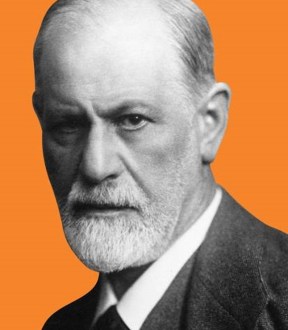
Sigmund Freud – Psychodynamic Approach (1900’s)
Freud publishes his book ‘Interpretations of dreams’ and the Psychodynamic approach was born! Freud believed conflicts within the unconscious mind (a part of the mind which we are unaware of) were the root to all our problems. He believed that our dreams acted as a pathway to our unconscious thoughts. He also claimed that bringing unconscious thoughts to the conscious by using psychoanalysis (talking therapy) would help to resolve these conflicts. Freud focused on psychology being more detailed and interpretive. He aimed at collecting detailed data and tried to avoid simplifying things like Wundt did.
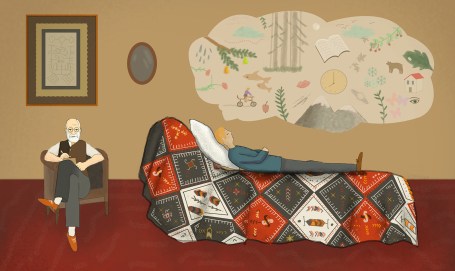
Freud believed that unconscious conflicts usually dated back to childhood and could manifest themselves later on in life causing psychological issues such as anxiety or poor relationships. Freud is still seen as a key figure in psychology and although his theories were (arguably) driven by sexism and cocaine, his theories help us to understand the development of Psychology as a subject.
Ivan Pavlov (1902)
Definitely not a psychologist but nevertheless happened upon a major theory of learning whilst studying the digestive systems of dogs. Two events that occur together tend to become associated. Pavlov had discovered classical conditioning.
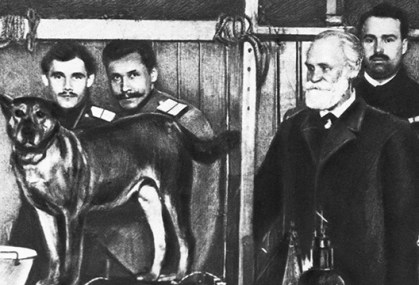
John Watson – Behaviourist Approach (1913)
Behaviourism, the idea that behaviour is influenced by association or consequences in the environment. Infamous for his study of Little Albert in which the unfortunate child was to become fearful of white rats and anything white and fluffy! Using Pavlov’s ideas Watson, conditioned the fear and discovered a likely mechanism for the formation of phobias. In 1913 he gave his seminal talk ‘Psychology as the Behaviourist sees it’ at Columbia University and Behaviourism was born!
https://www.youtube.com/watch?v=9hBfnXACsOI&feature=emb_logo
As an interesting aside:
Watson later realised that advertising was a far more lucrative career than academia. Using his expertise in classical conditioning he became famous in his use of sexual associations with a range of products, most notably Pebeco toothpaste. He also popularised the concept of a ‘coffee break’ whilst working for Maxwell House! Watsons advert for toothpaste encouraged women to smoke, provided they used toothpaste afterwards. Edward Bernays (nephew of Sigmund Freud) was also involved in tobacco advertising at a time when women did not smoke. During the New York City Parade he instructed a group of female models to light their ‘Torches of Freedom’ as a sign of female equality. It attracted maximum publicity and his market for tobacco products doubled over night!
Carl Rogers & Abraham Maslow – Humanistic Approach (1950s)
Humanists believed that behaviour is the result of individuals drive for self-actualisation (reaching ones full potential). Based initially on the work of Abraham Maslow and Carl Rogers, as humanists, they believed in free will. Humanists rejected the ideas of behaviourism and the psychodynamic approach. They believed that these approaches were too deterministic (forces beyond our control, dictate our behaviour) and this did not take into account what makes us human i.e. emotions, feelings and conscious choice.
https://www.youtube.com/watch?v=X6fidphMX38
Cognitive Approach (1960s)
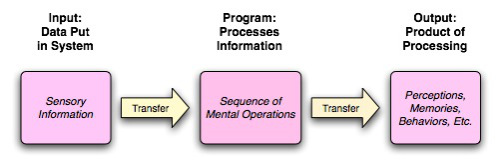
The cognitive approach believes that behaviour is a result of our inner mental processes. Now seen as a major force in psychology, the approach initially developed in response to:
- A need for a better understanding of human performance in terms of memory
- Computer science, which helped to produce better analogies for brain function – our minds are like computers.
The cognitive approach considers memory, attention, perception and language acquisition and essentially believes that our thoughts and our mind have a key influence on how we behave. The cognitive approach contributed to psychology becoming a science because they developed lab experiments (IV and DV) that enabled psychologists to make inferences about how the mind works based on observable behaviour, unlike Wundt who simply asked people to recall thoughts and feelings.
Albert Bandura – Social Learning Theory (1960s)
Bandura tried to provide a learning approach, and in particular focused on the social aspects, realising that we often learn by imitation. This link between learning (a cognitive process) and copying people from our social environment, provided the link between cognitive psychology and behaviourism. Essentially, SLT is the psychology behind peer pressure and media influence. Bandura’s classic research on imitation of aggression in young children will be considered in more detail later.
https://www.youtube.com/watch?v=zerCK0lRjp8
Biological Approach (1980s)
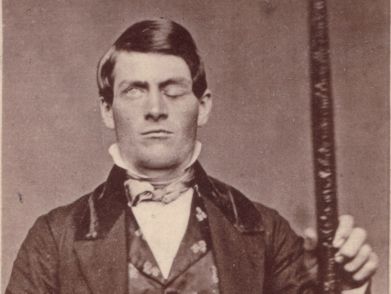
The biological approach sees anything psychological is first biological. They believed that genetics and brain structures were a key influence on behaviour. Advances on scanning techniques and methods of brain investigation paved the way for a more biological theory of human behaviour. The biological approach built on the earlier work of Roger Sperry, Wilder Penfield and others who had demonstrated links between certain brain areas and specific behaviours, emotions or sensations. Much of our early understanding of the brain was based on case studies such as the infamous Phineas Gage and a variety of patients who had suffered brain damage.
Cognitive Neuroscience (now)
By the end of the twentieth century, scanning techniques had moved on further. fMRI and CAT scans were allowing for a far more detailed mapping of the brain and nervous system and for the first time non-invasive methods of studying the brains of conscious patients became possible. Patients could perform tasks whilst their brains were being observed in action. Finally it was becoming possible to investigate biological structures involved in mental states (cognitions).
 CGS Psychology Blog: Mrs Harris