
Features of Science:
THE PROF – i.e. The Professor – hopefully this triggers an association with science, as professors are academic and tend to be focused on the science!
Theory construction
Hypothesis testing
Empirical Method
Paradigm & paradigm shifts
Replicability
Objectivity
Falsification
We will be looking at a number of principles including: falsification, hypothesis testing, theory production replicability, objectivity and empirical methods in order to justify some reasons why psychology can be classed as a science. However, it’s also important for you to understand both sides, and therefore you will need to understand arguments that support that psychology is not a science.
This is a really useful video that explains all the features of science. It is not the most exciting, but it is clearly explained. If you would prefer, you can read what they are below the videos.
Theory construction:
I often ask you about theories in psychology, like what are the psychological theories for memory? The multi-store model of memory is a theory. A theory is a general law or principle that is used to explain something.
Theory construction occurs by gathering evidence from direct experience or observations and this also called induction. For example, you noticed the cost of all the chocolate bars in your local shop has just increased. You work out a possible explanation (theory) for this, which is that the government has increased prices to try to promote more healthy diets.
Hypothesis Testing:
These are good examples of a theories as it proposes a simple explanation that reflects reality and if a theory is sound, it would also be easy to make predictions on the basis of that theory. This is when the role of hypothesis testing comes in.
A key factor of theories is that they can be tested in a scientific way, and theories should suggest a number of hypotheses. For example Miller may have a hypothesis which predicts that people will be able to remember a 4 digit pin code more effectively than a 8 digit bank account number. This hypothesis can then be tested by setting up an experiment where a group of participants are given 4 digits to learn, and another set of participants are given 8 digits to learn and the results of the groups are compared. If the hypothesis is supported, then the theory is strengthened, if the hypothesis is rejected, then the theory will need to be revisited or revised. The process of deriving a new hypothesis from an existing hypothesis is called deduction.
Empirical Method:
Empirical means that data must be collected through direct observations or experiments. Empirical research would not be based on arguments or opinion, and it must have tangible evidence to support it. Experiments and observations are carried out in order to support and verify theories.
Freud’s Little Hans study (Psychodynamic approach) is a good example of a researcher in psychology who lacks empirical method. Although he did make some observations, most of the observations were made by little Hans father and were anecdotal. His observations were then interpreted in a very subjective manner, and there was no way of gaining tangible evidence of the unconscious mind. However, observations made by Watson and his study on Little Albert, showed that Little Albert’s fear derived as a consequence of the classical conditioning of the loud bang and the presence of a rat.
Paradigm & Paradigm shifts:
A paradigm consists of the basic assumptions, ways of thinking, and methods of study that are commonly accepted by members of a discipline or group. Sciences such as biology, or physics have a number of principles at their core, for example biology have their evolutionary theory and physics have their standard model of the universe.
Psychology on the other hand have so many overlaps and disagreements. For example, the biological and social explanations are completely opposing and because of conflicts such as this, psychology is argued to NOT BE A SCIENCE! BECAUSE WE DON’T HAVE ANY PARADIGMS.
Paradigm Shifts:
A paradigm shift occurs when the old paradigm does not have enough sufficient evidence to be believed by the majority of people. But more typically, a new/better belief is put forward that reflects reality more so than the old paradigm. For example, Newtonian mechanics was the primary paradigm in physics until the 20th Century when Einstein’s theory of relativity was demonstrated to be a better approximation of the Physics of the universe.
It is argued that it is NOT possible for psychology to have a paradigm shift, and this is because there is not an agreed way of thinking about any given concept. This is because we have so many of the approaches e.g. cognitive, behaviourist, psychodynamic etc, and they all conflict, and some disagree with each other. Therefore if there is no agreement, there is nothing to shift to. This is very different in comparison to subjects like Physics as outlined above.
However, it could also be argued that Psychology have had some shifts. For example, within cognitive psychology there used to be the agreed belief that the mind and the brain are separate entities. However, the development of neuroscience created a shift in this belief, and now amongst psychologists it is agreed that the mind and brain are connected. In addition, there used to be a belief that nature and nurture should be studied separately. However, it is now the more common belief to assume that nature and nurture can not be separated. The interactionist approach was developed to highlight this new belief. For example, even biological psychologists who study genetic influences on schizophrenia, will still consider the effect of environmental factors.

Replicability
This refers to whether a particular method and finding can be repeated in the same way in order to compare results. If a dramatic discovery is reported, but it cannot be replicated by other scientists it will not be accepted. If we get the same results over and over again under the same conditions, we can be sure of their accuracy beyond reasonable doubt. If you can replicate findings several times, you are proving that it isn’t just a fluke!
This gives us confidence that the results are valid and can be used to build up a body of knowledge or a theory: vital in establishing a scientific theory. For example the research by Milgram has been replicated many time in different countries, different genders, and at different times and they were still able to replicate similar findings. However, there are a number of examples where research has not been replicable, or cannot be replicated due to ethical reasons. These studies are good to bring in when arguing that psychology is less scientific.
Objectivity:
Researchers should remain totally value free when studying; they should try to remain totally unbiased in their investigations. I.e. Researchers are not influenced by personal feelings and experiences. Objectivity means that all sources of bias are minimized and that personal or subjective ideas are eliminated. The pursuit of science implies that the facts will speak for themselves, even if they turn out to be different from what the investigator hoped.
Research methods such as lab experiments are argued to be the most objective. There are also techniques such as single-blind and double-blind tests that can be used in order to increase objectivity by reducing the chances of bias.
Falsification:
Falsification works by finding evidence that disproves theories. I think the easiest way to understand falsification is like a process of elimination, the more theories you test and disprove, the closer you will get to the answer. Theories that survive most attempts to falsify (disprove), tend to become the strongest theories, not because they are necessarily true, but because despite the best efforts of researchers, they have not been proven false.
Falsification is a process that believes that in order to be more scientific, you need to stop always looking for examples of things that fit your theory, but you should look for things that don’t! This is because however many times you see something happening, you cannot prove that it will always happen like this. However, one occurrence of something not happening in the way that you predicted, disprove a theory and this means that the hypothesis needs to be amended. This is how psychology makes progress within science.
Falsification is the only way to be certain – as Karl Popper pointed out: ‘No amount of observations of white swans can allow the conclusion that all swans are white, but the observation of a single black swan is sufficient to refute that conclusion’

Someone in your class has completed an experiment in which participants who listened to music during a memory task remembered far fewer words than participants who did not. The student then announces, ‘I’ve proved that music has a negative effect on memory recall’. As soon as you look at this in more depth and can see there are many more explanations to be considered, it is easy to see how this theory can be falsified (disproved). For example, you find that classical music improves memory recall. Well, you have just disproved your original theory that music has an negative effect on memory recall! This is falsification at its finest.
Not all theories can be falsified. Freud’s theories are a classic example of this. How can you test the unconscious mind, if we are not even aware of it? Freud seems to make all of his theories fit with any given scenario, but he actually has no method of testing his theories. He is not able to prove that his theories, let alone disprove them. So if you are ever asked to make an argument about whether psychology is less scientific, Freud is a good one to bring in as you can highlight that not all theories in psychology are falsifiable.

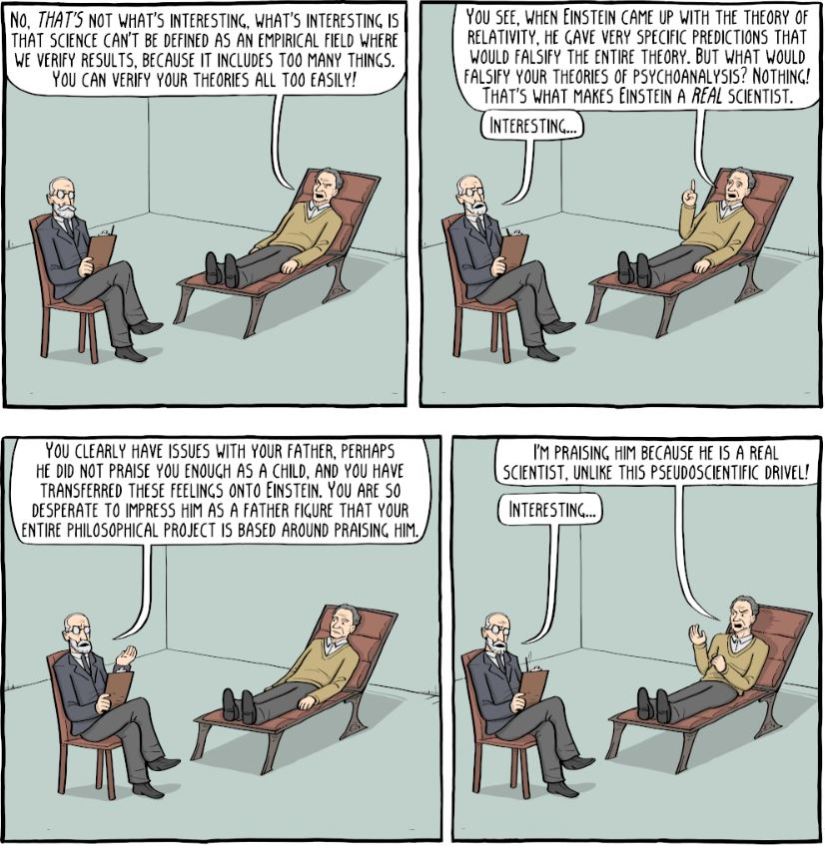
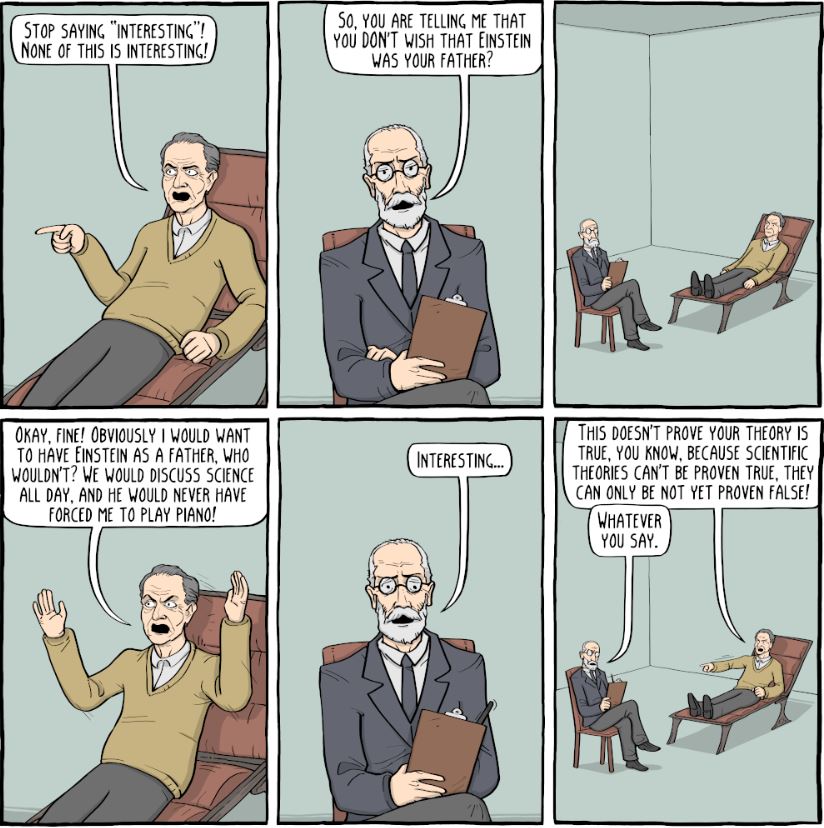
This next video outlines some possible exam questions about features of science. I do find that this part of research methods is often overlooked when doing revision, so please make sure you make a real conscious effort to go over this. In my experience students tend to struggle with falsification, theory construction and paradigm shifts.
Psychological Reports
As part of your exam, you also need to understand how to write a report for psychological research. A report contains the following sections:
- Abstract
- Introduction
- Method (Design, Participants, Apparatus/Materials, Procedure)
- Results
- Discussion
- References
- Appendices
What is the purpose of a report?
Psychological reports allow Psychologists to show case their findings of important and ground breaking research. It is important for Psychologists to detail all of their ingredients used (from materials used, to results. Another reason why Psychologists publish research is so that other psychologists can replicate the study conducted.
However, at AS/A Level, reports commonly appear in the form of a study in textbooks
Why is psychological report writing important?
In order to guide you through this process, you will need to pick a research topic/area that they would like to conduct an investigation on, which will both assist and help you understand how each section unfolds
Abstract
The abstract is a summary of the entire investigation you have conducted. It includes a few sentences for each of the sections outlined above. It’s not a long piece and they are written to either 150 words or a maximum of 200 words.
The abstract is written at the last stage of your report writing process. An example can be seen below:
The aim of this research was to build an understanding of the effects of eating chocolate on the mood of 6th formers from Chesham. This research studied 20 young people from Chesham, and studied the short term effects of chocolate on mood. Using an independent measures design, one group of 10 participants ate chocolate and another group of 10 participants did not eat any chocolate. Mood was measured using a rating scale. A significant effect was found between eating chocolate and positive mood compared to those who did not eat chocolate. This could lead to the encouragement of eating chocolate around stressful times such as exam period in order to help improve student’s mood.
Introduction
The introduction section sets the scene for the reader. It is the section in your report that contains relevant background theory and studies which are written in a logical manner to put the aim and hypothesis of your investigation into context. This part of the report needs to convince the reader of the importance of your research. An introduction should follow the steps below:
- Start with general theory, briefly introducing the topic.
- Narrow down to specific and relevant theory and research. One or two or three studies are sufficient.
- There should be a logical progression of ideas which aids the flow of the report. This means the studies outlined should lead logically into your aims and hypotheses.
- Write a paragraph explaining what you plan to investigate and why. Use previously cited research to explain your expectations. Later these expectations are formally stated as the hypotheses.
- State the alternate hypothesis and null hypothesis
See below for an example of an introduction:
Chocolate has the capacity to help the release of endorphins (the feel good hormone) into the body, which could potentially help alleviate mood (Smith, 2015). Previous research by Pase (2007) has suggested that cocoa polyphenols, found in chocolate can enhance mood in a positive way. The research found that after 30 days of the chocolate intake, participant’s mood had significantly improved. However, Pase (2007) used a sample of middle-aged participants from Australia and investigated the long term effects of chocolate on mood. This research plans to study young people from Chesham, and study the short term effects of chocolate on mood. This research aims to understand the effect of chocolate on mood in a specific school and year group. If the findings suggest that chocolate does improve mood, it could help students during stressful times such as exam period. The purpose of this study is to build an understanding of certain techniques that can be used to help students enjoy and progress in school in the Chesham area. Therefore our research question is: Does chocolate improve mood in young secondary students from Chesham?
Due to previous research, it is hypothesised that ‘there will be a positive effect on mood (measured on a rating scale 1 being very bad mood 7 being very good mood) and those who eat chocolate compared to those who do not eat chocolate’. The null hypothesis predicts that ‘there will be a no effect on mood (measured on a rating scale 1 being very bad mood 7 being very good mood) and those who eat chocolate compared to those who do not eat chocolate’.
Method Section
The Method section is the King or Queen section of your whole report. It is the section that requires you to be thorough so that anyone who wishes to replicate your study can follow the step by step process in what you have done. The Method Section includes four key sections – known as D.A.P.P.
D – Design
A – Apparatus/Materials
P – Participants
P – Procedure
An example of a method section is displayed below:
Deign: An independent measures design will be used where a group of 10 participants will eat a bar of chocolate (condition 1) and another separate group of 10 participants (condition 2) will be told to not eat chocolate all day. The participants will be randomly assigned by placing all 20 participants into a hat and then placing the first 10 selected names into condition 1 and then last 10 names will be placed into condition 2.
Sample:
20 participants from Chesham Grammar, age range 16-18. The sample will be collected from the Cafe Africa at 9am on 14/06/15 using an opportunity sampling method.
Materials:
- 10 bars of Cadbury chocolate of 250g will be given to the participants in condition 1.
- A printed out questionnaire that measures mood will be handed out to each participant at the end of the day. See appendices 1.
- Pens for the participants to fill out the questionnaire.
Procedure:
All participants will be briefed in room D4 at 10am. Condition 1 will be provided with a 250g bar of chocolate and asked to eat it throughout the day. The bar of chocolate must be eaten by 3pm, which is when they will be asked to return to D4 to fill out the questionnaire, example provided above. Condition 2 were asked to not eat chocolate throughout the day and to return to D4 to fill out a questionnaire. At 3pm the participants were given a print out of the questionnaire and a pen to complete it and were given as much time as they needed (see appendix 1 for a copy of the questionnaire).
Results
In the results section, you would give a summarised account of the data collecting using descriptive statistics – mean, median, mode and statistical results- you can find more information at the statistics link on the blog.
WARNING:
At no point in this section, would you include the raw scores – these would need to appear in the appendices section of your report.
The results section should indicate what is happening rather than the why. The why is what you will be exploring in the discussion section of your report. It is best also to present visual representations of your data e.g. bar graphs, pie charts etc.
Discussion
The discussion will include the following:
- Providing an explanation of your results.
- Linking back and comparing to studies mentioned in your introduction to your results. Are your results similar or different to previous research?
- Highlighting the weakness of your study and mentioning modifications to your study, if you were to conduct the study again.
- Providing an overall conclusion in the conduction of your study.
References
Referencing is a bit like tagging your friends when you add pictures of them on social media sites. By you tagging your friends, you are acknowledging your friends in the photographs.
Referencing is a similar process only that when you access other psychologists it is academic convention to acknowledge researchers in your work.
It is the Introduction and Discussion sections of your report that you will need to acknowledge researchers’ theories, studies or models.
How to Reference Books the Harvard way?
We will use Professor Edwin G Boring’s book – A History of Experimental Psychology
as an example.
- When referencing books, you need to include all the authors’ names. Their surname is mentioned first and then
their initials. Warning: Each initial must have a full stop and you need to include the commas. For example: Boring, E.G. - You then need to include the date in brackets after the last author’s name you have written.For example: Boring, E.G. (1929)
- Next you need to include the title of the book. This should be italics format.
Boring, E. G. (1929) A History of Experimental Psychology. - This doesn’t stop here. You will need to include the publisher, location, edition and any page numbers of the pages you paraphrased research from. These need to be separated by the correct punctuation mark. For example:
Boring, E. G. (1929) A History of Experimental Psychology, New York: Century. Page 20.
In sum a book reference should include:
Author, A. A. (year). Title of work. Location: Publisher, Page numbers
The list of books you reference must be in alphabetical order, in terms of the author’s name. If you have many books of the same author name, indicate the first book published for that author.
How to Reference journals:
If you use the original research paper then this must be referenced, below are examples of two of the core studies and how they should be correctly referenced.
- Grant, H. M., Lane, C. Bredahl, J. C., Clay. J., Ferrie, J., Groves, J. E., McDorman, T. A. & Dark, V. J. (1998) Context dependent memory for meaningful material: Information for students. Applied Cognitive Psychology, 12, (6), 617–623.
- Sperry, R. W. (1968) Hemisphere deconnection and unity in conscious awareness. American Psychologist, (23), 723–733.
The format for this is surname, initial(s). (year) Name of journal article. Name of journal in italics, Volume number (Issue number), first and last page numbers.
e.g. Author, A. A., Author, B. B., & Author, C. C. (year) Article title. Journal Title, volume number (issue number), page numbers.
Appendices
Appendices should contain the following items:
- Consent Form– a copy of the one you give to participants.
- Standardised Instructions – a script like document which illustrates the experiences of all participants in each experimental condition.
- Ethics Sheet – this will appear in your consent sheet which will outline the ethical issues that will not be breached.
- Materials – these could be, for example, the word lists used in memory experiment, power point slides etc.
- Raw Data – these should be in the form of tables illustrating both condition results obtained for each participant.
- Statistical Analysis – any calculations conducted on data should appear here.
Peer Review:
Researchers get to read other people’s studies and keep in touch with new ways of thinking and scientific developments. Knowledge grows through the sharing of information. Studies submitted for publication are subjected to critical appraisal, which helps to ensure poor quality research does not enter the public domain.
The main aims of a peer review are to:
- allocate research funding – in order to decide whether a proposed research project should be given funding or not, this could be through the government or research charities.
- validate the quality and relevance of research – in order to ensure that the results portrayed are accurate and that it hasn’t just been made up.
- to suggest amendments or improvements – these could be minor or major changes. In some cases, the research may be thrown out or deemed inappropriate for publication.
A peer review will go through the following 3 stages:
STAGE 1: The system begins with the research paper being submitted to a journal for consideration for publication.
STAGE 2: The editor of the journal examines the topic and sends the paper to other psychologists who are experts in the field.
STAGE 3: Their critical appraisal of the work is returned with recommendations about suitability for publication.
Questions that a peer reviewer would consider:
Introduction:
- Is the research appropriate for their study?
- Is the research suggested original and interesting?
- Is the current state of the area of research, accurately represented?
- What specific questions does the study address?
Approach/method:
- Were appropriate controls used?
- Was is ethical?
- Can you think of a better way to address the research question?
Results:
- Do the figures/tables/data used contribute to the paper or are they useless?
- Are the authors interpretations of the results backed up by the data?
- Are the statistical analyses appropriate
The peer reviewer, after answering the above questions must decide to either:
- Accept the paper
- Reject the paper
- Or suggest amendments
Problems with peer review:
Researcher bias – a reviewer may strongly support an opposing view, making them less likely to provide an unbiased opinion of the work. Many believe that it is not possible to separate a reviewer from their personal, political or cultural values. Similarly, the reviewer is more likely to look favourably upon research presented by someone within their social circle.
Institution bias – research from prestigious universities tend to be looked upon more favourably. For example, you may find yourself thinking that because the research was carried out by Cambridge University, it must be valid. On the flip side, research carried out in Portsmouth must be questioned more thoroughly because they are not as prestigious or valued as highly as Cambridge.
Gender Bias – male researchers seem to be favoured over female researchers. This is because more research carried out by males are published over females.
The ‘file-drawer’ problem – there is a bias towards publishing studies with positive results i.e. those supporting the hypothesis. Negative findings tend to be either rejected or are never submitted for publication. For every study showing positive findings, there could be a hundred with negative results stuffed in a university filing drawer – our understanding of a subject then becomes distorted because there may be lots of research disproving theories which we are only aware have been proved!
Anonymity – Some peer reviewers use anonymity to criticize rival researchers and get away with it, very sneaky! In addition, researchers may be in direct competition for the same funding pot and could be another reason why researchers may use anonymity to sabotage others.
Ways to overcome Peer Review Biases:
- Issues of bias can be overcome by using a double-blind peer review. This is when both the reviewer and the author are anonymous, and therefore no extra information is provided which could influence their judgement.
- The use of experts to evaluate the quality of research ensures a high standard of rigour in order to further improve the validity of research that the public can use.
- Ensuring that peer reviewers receive appropriate training and are made aware of the biases so that they can ensure that they do not make the same mistakes.
 CGS Psychology Blog: Mrs Harris