
What is Social Change?
Social change is when a whole society adopts a new belief or way of behaving which then becomes widely accepted as the norm.
This involves the way in which society develops, through big changes in peoples behaviours, belief and attitudes. This process occurs continually, but at a gradual pace, with minority influence being the main driving force for social change. The minority gradually win over the influence on the majority and create brand new social norms.
Here’s a classic example of social change: In the 1950s a small number of environmentalists emerged. They had these ‘radical ideas’ about recycling and pollution which were dismissed. However, now their attitudes about the environment are the norm and most people believe that recycling and looking after the environment is a good thing.
There are loads of examples of social change throughout history, some positive some negative, but there are also shifts in behaviours and attitudes that are changing everyday- being environmentally aware and even social distancing with coronavirus!
What is Social influence
This the process by which individuals and groups change each others attitudes and behaviours. This includes; conformity, obedience and minority influence
Most importantly, social influence always starts out with a small group or a minority, trying to win over the rest of society in order to create social change.
According to the specification for this topic you need to know the following; “The role of social influence processes in social change”
This, in it’s simplistic terms, means you need to be able to use what you have learnt about social influence and explain how and why social change has happened as a result of them. The ones will likely to being using include, minority influence, NSI & ISI and obedience.
Minority Influence
Consistency contributes to social change when a minority repeatedly gives the same message. This makes a majority reassess their belief and consider the issue more carefully (and so may adopt the minority point of view)
Commitment contributes to social change when a minority show they are willing to give up something for their belief the majority take their argument more seriously (and so may adopt it as their own)
Flexibility / being non-dogmatic contributes to social change when a minority show they are willing to listen to other viewpoints the majority listen to their point of view / take their argument more seriously (and so may adopt it as their own)
Processes of social influence to create social change – Minority Influence
Looking through previous exam questions, there is more content you could learn and apply to this. Outlined below are more steps on how social change occurs. This builds upon minority influence, seeing this as the igniting spark of social change. However, to some extent it also ties in some of the earlier ideas of internalisation and compliance that we looked at in conformity. These will not be explicitly asked about, unfortunately different textbooks have different information in them about this subtopic. I would recommend you make sure you know how the 3 topics (in bold above) can impact social change and you have real life examples to explain how this works. That being said, it will never hurt to have more information to use in an exam question, therefore I would recommend you read over the key terms below and add these to the following notes where you think it is appropriate.
- Drawing Attention
The minority need to get lots of media attention. They are a minority and may therefore struggle to get their message across. Usually this involves organising marches, sit ins, blocking roads or access to public buildings. Examples would include the civil rights protests in the southern states of the USA and Ghandi’s sit ins during India’s fight for independence from the British. - Deeper processing of the message
If a message is significantly different to ideas currently in circulation amongst the majority it gets further attention. People want to know how others can develop ideas so different to those commonly held as fact. Because the message is processed at a deeper level it is likely to take on greater significance and at least for a few, lead to internalisation. - Consistency
As already seen with Moscovici’s research and Conversion theory, consistency is vital, both over time and between individuals within the minority group. - Augmentation Principle – AKA Commitment
Some members of the minority often take greater risks and sacrifice to get their message across. Women that strapped themselves to the gates of Greenham Common US air force base during the CND rallies of the 1980s, or members of Greenpeace that place small boats between whales and the harpoons of the whalers. This are seen to be making sacrifices and clearly not benefiting from their stance. - Snowball Effect
Gradually others are drawn to the message and numbers start to increase. In the early days this will be via internalisation of the message. Later, as numbers grow and grow, those left outside will start to feel like a minority and may conform initially via compliance and NSI. They will feel left out by not conforming. Eventually, the message will be so strong that a change in the law will be needed. The Civil Rights Act of 1964 outlawed racial discrimination in the USA. In the UK gay marriage as recently been legalised, smoking has been banned in public places, drink-driving has long since been illegal. All of these started as minority ideas. - Social Cryptomnesia
This is a strange concept. You probably recognise the ‘amnesia’ component as referring to some kind of memory loss. This refers to the idea that as a social group we tend to recall that change has taken place but tend to forget about the steps that brought it about; the rallies, sit-ins, riots etc.
Conformity & Normative and informational Social Influence
By encouraging the belief that others are doing it or advising people that it is a better way to act (leading to internalisation). For example, campaigns might be developed highlighting that everyone else is giving up smoking or everyone is using Tik Tok instead of Facebook (Normative SI). Adverts highlighting how bad smoking is for your health and all the benefits of Tik Tok over Facebook (Informational SI). Alongside this you can bring in the aspects of minority influence to explain social change
- Consistency – hearing the message over and over again draws your attention and makes you question and think more deeply
- Snowball effect – gradually more and more people change their view until they become the majority

Asch’s research shows how a dissenter (MINORITY) can break the majority view and encourage others to dissent. This shows how a dissenter can potentially cause social change.
- Drawing attention by dissenting promotes deeper thinking
- Commitment – risk backlash from the majority
- Snowball effect – one dissenter can lead to more dissenters until eventually everyone dissents
Obedience
Changes to the laws which make a certain behaviour more of a social norm which others then adopt. This is because following the law and authority figures is a social norm so this can also create a snowball effect where more and more people change their views and behaviour in order to avoid punishment or consequences. For example, changes in attitudes towards smoking in doors and drink driving.
Dictators can bring about social change through power and through the process of obedience. This leads to groups of people changing their behaviour because of the fear of punishment/consequences of not obeying.

Milgram’s variations taught us that a disobedient confederate (MINORITY) can significantly reduce the obedience rate of the genuine participant.
- Commitment: risking backlash, punishment from the authority figure
- Draw attention: disobedient individual makes you question whether it is moral or not
- Snowball effect: if one person disobeys – leads to more people being disobedient

Explaining social change using the Suffragettes as an example
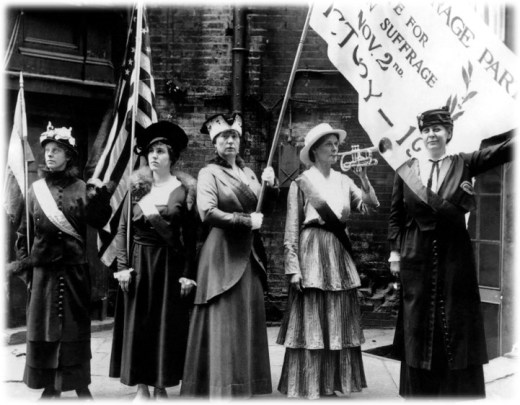
Personally this is how I’d answer the typical questions that AQA seem to ask. You may be asked about recent revolutions/evolutions in gay rights, recycling, vegetarianism, ant-smoking etc., but the same rules and same basic structure are the same:
1. Getting started
In the late nineteenth and early twentieth century few people considered women should have the right to vote (minority group). Even women conformed to the traditional gender role has it had existed for centuries. However, during the second decade of the twentieth century a minority of women began calling for suffrage (drawing attention). At this stage we have a small group ignoring the pressure to conform. This could be for a number of reasons that we’ve already seen: It is clear that the women involved
• Were low in authoritarian personality
• Were non-compliant personalities
• Had internal locus of control.
2. Bringing about change
Asch and Milgram both found that having an ally significantly increases independent behaviour. Once the group had become established and gained publicity they would have acted as a disobedient role model to other women. Obviously at this point they would still be a minority and according to Moscovici, minorities are more likely to create internalisation since their message is examined more closely to see why it differs from the majority view. Internalisation is a private as well as public conversion. If you look back at the “calling a blue slide green” study you’ll also see that Moscovici believed the message of a minority needs to be consistent and the group need to be committed. Clearly the suffragettes were consistent and as for committed… Emily Davison threw herself under the horse of the King’s horse Anmer as it ran in the Derby and died a few days later.
3. Critical mass – Snowball effect
There eventually comes a point when the message has so much support that others begin to conform through normative social influence. The once minority now hold the majority position and others feel left out. Minority groups often get lots of media coverage (consistency) because their message is different (deeper processing). Lots of coverage can give the impression that the idea is more prevalent than it really is. However, with NSI there can be compliance rather than true conversion. Those conforming may only do so publicly, privately still maintaining their original beliefs. Today those airing dissenting views would be seen as sexist. Public opinion expects us to conform!
4. Enshrined in law
In 1918 Parliament passed the Representation of the People Act giving some women over the age of 30 the right to vote. Further legislation has followed since. We now have obedience!
Economical impact of social change

When we talk about the economical impact we are discussing how the psychological theory or research or topic has affected the process or system by which goods and services are produced, sold or bought in country or region. Therefore you be expected to argue whether social change has been beneficial to the economy and explain how this has happened using psychological theory. Below are some examples to help you with this;
Businesses could promote people who are “yes’ people, meaning they agree with whoever is higher than them in the professional hierarchy. You might even say they have authoritarian personality and/ or are highly obedient/ conformist. Now if you promote someone who agrees with everyone above them, then no change will happen as they will not question the status quo. But this could be beneficial in some areas e.g. the army, police force, M15.

However, it could be beneficial for a business to employ someone who is going to act as a dissenter and question the norms for the benefit of the company, not only could this lead to new innovative methods and systems for the business but it could also provide social support for others. This could encourage them to question the norms and see better ways of working. Therefore, this could result in innovative techniques that might increase productivity and/ or increase the businesses profit overall.
Temple Grandin is a really good example of this. She was one of the first scientists to report that animals are sensitive to visual distractions in handling facilities such as shadows, dangling chains, and other environmental details that most people do not notice. This lead to a large number of companies changing their cattle facilities. Temple Grandin explains that her autism enabled her to see things differently, and she describes her ability to think in pictures. She was one of the first individuals on the autistic spectrum to document the insights she gained from her personal experience of autism. She is a spokesperson for autism and will often promote the abilities that people with autism have, describing them as super powers.

Another example could be the social change of smoking. Prior to 2007, people could smoke anywhere they wished. Restaurants would have a smoking and non smoking areas and most pubs and clubs would be filled with smoking. The Tobacco Advertising and Promotion Act was established in the UK in 2002, with the majority of tobacco advertisements being banned in the country from February 2003, as outlined by Action on Smoking and Health.


By drawing peoples attention to this risk of smoking, stopping highlighting that other role models are doing it (stopping normative social influence) less people are going to smoke, which means less people are going to end up with heath complications as a result of this, thus putting less economic pressure on the NHS. However you could argue, that tax being made from more people buying cigarettes has now dropped, which might suggest a negative impact on the economy.

I’m sure there are many more examples, E.G Recycling, social media usage etc. if you have any bright ideas that is fine, as long as the focus is on how social influence process have caused social changes and how that has effected the economy. (Providing the question is asking about economical implications).
Evaluating Explanations of Social Change
Strengths:
- Point: One strength is that there is research to support the idea that consistency and normative influence (NI) can create social change Evidence: Nolan et al (2008) conducted an experiment to see if normative social influence would reduce a community’s energy consumption. In San Diego, California for a week, messages on the front doors of house was places with the key message that most residents were trying to reduce their energy usage. In a control group, in another community the key message on front doors was just asking people to conserve their energy, but made no reference to other people’s behaviours. The results demonstrated a significant decrease in energy uses in the experimental group. Explain: Thus, showing the influence that normative social influence can have to evoke positive social changes around in a small community. Consequence: Therefore, this theory provides a credible explanation, and can have the power to be applied to real life situations due to the high ecological validity of the research. Challenge: However, the research to support is very reductionist. It assumes that something as complex as social change can be influenced by something as simple as consistency and NI. This research is not longitudinal and is based on one community, and therefore we can’t be sure whether it had a permanent effect, and whether consistency and NI led to a wider social change. This therefore weakens the support for the theory.
- Point: A strength of the theory that minority influence can cause social change is that it has practical applications. Evidence: For example, in the case of Rosa Parks, her act of choosing not to stand up on a segregated bus, as a minority, led to a rise in the number of people supporting the civil rights movement. Explain: This shows how a minority can influence the opinion of the majority, as her act helped to change the views of many Americans so that is now segregation banned, and therefore shows how minority influence can be useful in real-life situations to make significant social changes. Consequence: Consequently, the theory of minority influence can be applied to the real world in order to make positive changes, such as gaining rights, or more currently, to encourage more sustainable behaviour in order to combat climate change.
Weaknesses:
- Alternative explanation: Point: The theory that a minority can cause social change, may not provide a full explanation. Evidence: Mass and Clark (1984) got a group of heterosexual participants to watch a debate on gay rights between a minority heterosexual group and a minority homosexual group. The heterosexual participants were more likely to be swayed by the minority heterosexual group compared to the minority homosexual group. Explain: This offers a different explanation and suggests that minority influence may not be the sole factor in creating social change as we are more likely to be swayed by people like ourselves i.e. our in-group. Consequence: Consequently, the theory of minority influence may lack accuracy as a sole explanation. Taking a holistic approach by considering other factors, may help us to fully understand which social processes in combination can create social change.
- Ethnocentric: Point: A weakness of the theories used to explain social change is that they are ethnocentric Evidence: For example, studies such Moscovici, Asch and Milgram are all examples which are used to support the idea that a minority can sway the majority, but they are use American participants. Explain: This is a weakness because the theory that minority influence can create social change cannot be generalised to other cultures. The samples above reflect the behaviour of individualist cultures, but what about collectivist cultures? Consequence: Consequently, this means it is more difficult to generalise the theory to other cultures because it may not show a valid reflection of how cultures respond to minority influence. Challenge: On the other hand, it highlights the importance that research needs to be conducted in other society’s outside western ideas so we can make comparisons and make new theories that can be developed to apply to different cultures.
- Research against the impact of minority influence on social change: Nemeth (1986) argues that the effects of minority influence are indirect and delayed. They are indirect because the majority are only influenced by the specific issue and not the overall change. Also, this change happens over such a delayed period of time, we can’t be certain that it is caused by the social influence process being studied. For example the Civil Rights Bus Boycotts – in the Rosa Parks video- They managed to make changes in that state to their rights on buses, but it took a lot of time and didn’t make the wider changes they were aiming for until much later in time. Therefore, its really difficult to isolate exactly what it is that causes the social change to occur.
 CGS Psychology Blog: Mrs Harris